
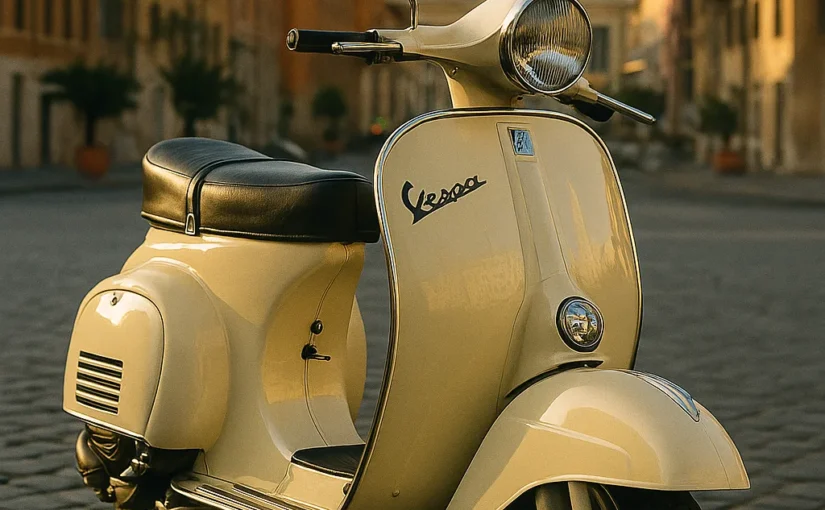
When someone says “Vespa,” you likely imagine more than just two wheels and an engine. You might see a sunlit street in Rome, a rider with a silk scarf flying in the wind, or a vintage model parked elegantly by a café. Vespa is more than a brand or a scooter—it’s a cultural icon, a fashion statement, and a timeless embodiment of Italian design. Since its creation in 1946, Vespa has evolved into a symbol of elegance, freedom, and identity for riders around the world.
A Post-War Invention That Became a Global Phenomenon
Vespa was born from necessity. In the aftermath of World War II, Italy’s economy was devastated, and people needed affordable, easy-to-use transportation. Aircraft designer Corradino D’Ascanio was tasked by Piaggio to develop something practical and accessible for the masses. His solution was the first Vespa—a scooter with a step-through frame, enclosed engine, and flat floorboard, ideal for both men and women.
It didn’t take long for the scooter to catch on. By the 1950s, Vespa was everywhere in Italy. It was compact, economical, and stylish—everything a post-war population needed. And thanks to clever branding and cinema appearances, its reputation grew beyond Europe’s borders.
Vespa in Film, Fashion, and Pop Culture
Part of what made Vespa a symbol of style was its appearance on the silver screen. In 1953, Audrey Hepburn and Gregory Peck famously rode a Vespa through Rome in Roman Holiday. That scene became one of the most recognizable moments in film history and catapulted Vespa into international stardom.
From there, the scooter appeared in dozens of films, from La Dolce Vita to Quadrophenia, and became a fixture in the Mod movement of 1960s Britain. Artists, designers, and creatives adopted the Vespa not just for transportation, but for its personality. Unlike cars or motorcycles, a Vespa seemed to say, “I have taste, but I don’t take myself too seriously.”
Fashion brands also embraced it. Magazine covers, advertising campaigns, and even runway shows began using Vespas as visual symbols of modern style with a retro twist. It effortlessly merged practicality with panache—something few vehicles can claim.
A Design That Stands the Test of Time
While the technology inside Vespas has changed over the decades, the visual language has remained strikingly consistent. The rounded body, smooth curves, and minimalist silhouette are instantly recognizable. The aesthetics are functional, but also intentionally beautiful—an example of how Italian industrial design can elevate even everyday objects into works of art.
There’s a reason Vespa models from the 1950s still feel relevant today. Whether you’re riding a vintage PX or a sleek new GTS, the shape remains a constant nod to heritage and tradition. That timelessness is part of why owning a Vespa feels like joining a lineage, not just buying a scooter.
More Than Mobility: A Lifestyle Choice
Riding a Vespa isn’t just about getting from point A to point B—it’s about how you get there. The upright posture, open frame, and slow-paced nature of the ride encourage presence, awareness, and style. It’s less about speed and more about enjoying the journey.
In cities like Paris, Milan, Barcelona, and now New York or Tokyo, Vespa riders form a quiet community. They wave at each other, park together, and share in a lifestyle rooted in elegance, independence, and appreciation for design. Vespa clubs and events continue to unite enthusiasts worldwide who see the scooter as an expression of personality.
Moreover, the brand has expanded into fashion and accessories, with Vespa helmets, bags, clothing lines, and even perfumes. It’s no longer just a scooter—it’s a way of life.
A Future Rooted in Heritage
Despite being over 75 years old, Vespa continues to evolve. Recent models like the Vespa Elettrica show that the brand is adapting to modern demands for sustainability and innovation, without losing its soul. The electric version maintains the same body design, while offering a silent and emission-free ride—proving that even tradition can go green.
Meanwhile, limited edition models, collaborations with brands like Dior and Sean Wotherspoon, and a loyal global fanbase ensure that Vespa remains firmly positioned at the crossroads of design and mobility.
Conclusion
Vespa is not just a scooter. It’s a cultural phenomenon, a celebration of design, and a reflection of Italian elegance that transcends generations. It speaks to those who value beauty, freedom, and individuality. Whether you see it on the streets of Florence or in a city near you, the Vespa will always stand as a symbol of movement—stylish, effortless, and timeless.


